Dwight Muhammad Qawi, the indomitable Hall of Fame boxer who rose from the streets of Camden and the walls of Rahway State Prison to become a two-division world champion, has died at the age of 72. Qawi’s sister, Wanda King, confirmed his passing on Friday following a lengthy five-year battle with dementia.
Born Dwight Braxton in Baltimore and raised in Camden, Qawi’s journey to greatness was anything but ordinary. His name, now immortalized in the International Boxing Hall of Fame, stands as a testament to personal redemption, unrelenting discipline, and ferocious talent.
A product of the unforgiving streets, Qawi found himself incarcerated in Rahway State Prison in New Jersey in the 1970s, serving time for armed robbery. There, behind concrete walls, he found purpose in the prison’s boxing program — a path that would redefine his life. Inspired by the mentorship of fellow inmates and volunteer trainers, Qawi threw himself into the sport with focus and fury. By the time he was released in 1978, the 25-year-old ex-convict emerged not just a free man, but a fighter with a mission.
Locally, he became known as “The Camden Buzzsaw,” a nickname earned for his relentless, pressure-heavy style. Fans remember how he would come forward with short, tight punches and an almost mechanical drive, smothering taller, longer opponents with a body-first attack. Qawi stood just 5’7” — short for a light heavyweight — but he fought like a tank with turbo engines.
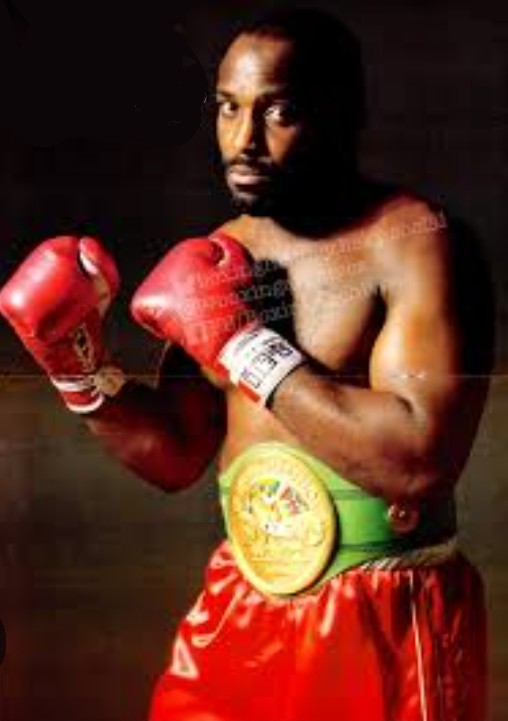
His breakout moment came in December 1981, when he stunned the boxing world by stopping the legendary Matthew Saad Muhammad in the 10th round to claim the WBC light heavyweight title. The win was no fluke. When the two met in a rematch eight months later, Qawi beat Saad even more convincingly, forcing a stoppage in the sixth round. These two wins established Qawi as a dominant figure in the division and cemented his place among the sport’s elite.
In 1982, Dwight Braxton converted to Islam and took the name Dwight Muhammad Qawi. His religious transformation was both deeply personal and symbolic of the new chapter of his life — one defined not by crime and confinement, but by discipline and destiny. His journey mirrored the gritty resilience of the city of Camden, where economic hardship and social adversity are daily realities.
After cleaning out the light heavyweight division, Qawi moved up in weight and captured the WBA cruiserweight title in 1985. One of the most memorable bouts of his career came in 1986, when he faced a young, rising star named Evander Holyfield. Their 15-round war is still hailed as one of the greatest cruiserweight fights in boxing history. Although Qawi lost by split decision, his performance elevated both men and cemented his legacy as one of the toughest competitors of his era.
Back in Camden, Qawi’s story has long been held up as a local legend. His name can be heard in barbershops, gyms, and community centers — not just as a champion, but as an example of what grit, faith, and self-belief can achieve against steep odds.
Over the last decade, Qawi had receded from the public eye, his once-rugged physical frame weakened by dementia. But the city never forgot him. In recent years, youth boxing programs across Camden continued to evoke his story as a source of inspiration. At the Camden Boxing Academy, a framed photo of Qawi hangs near the heavy bags, underscored with the caption: “Born a fighter. Built in Camden.”
Local tributes began pouring in across social media following news of his death. Camden Mayor Victor Carstarphen called Qawi “a true warrior and an enduring symbol of what Camden pride looks like.” Former training partners, gym rats, and fans alike recalled the champion’s humility, his storytelling, and the way he always made time for young boxers trying to find their way.
Though his battles in the ring were fierce, perhaps Qawi’s greatest victory was his transformation outside it — from prisoner to professional, from fighter to legend.
He is survived by his sister Wanda King and a devoted circle of family, friends, and fans who saw in him the power of second chances.
Play Ball

Research Maliah Jackson