I’m just gonna say this upfront. With Stafford’s ample throwing wing, he can reach any target that presents itself on the field. Team management needs to focus on the defense that is laying down on the job, allowing weaker foes to score on them, with a smile on their face.
Rams Los Angeles Rams, holding a 4-5 record and tied for last in the NFC West, navigated the 2024 NFL trade deadline with a clear sense of direction, choosing to keep core players like Matthew Stafford and Cooper Kupp. For a team not entirely out of playoff contention, but dealing with the complexities of a rebuilding phase, this decision speaks volumes about their current strategy.
As the trade deadline loomed, there was a mix of speculation and concern about what the Rams might do. Trade rumors swirled around many key players, including Stafford and Kupp, given that the Rams are in a somewhat transitional phase. Both players are veterans with high impact but are also nearing the back end of their careers, making them potential assets for a franchise contemplating a longer-term rebuild. However, rather than shipping out these veteran stars, the Rams held onto them, signaling a continued commitment to competing this season.
The Rams reportedly did, however, make some smaller moves, notably trading away lesser-used assets and focusing on minor roster adjustments that could benefit them immediately. Here’s a look at what transpired.
One of the Rams’ significant moves reportedly involved trading veteran offensive lineman
Joe Noteboom,who had been a staple in their offensive line rotation. Noteboom was traded to an AFC contender, helping to bolster that team’s offensive line depth as they chase a playoff berth. In return, the Rams secured a mid-round pick in next year’s draft. Given Noteboom’s expiring contract and the team’s focus on developing younger linemen, this move made sense in terms of value and opportunity cost
By trading Noteboom, the Rams gain some future draft flexibility while also opening up additional playing time for younger linemen. This approach is consistent with the Rams’ ongoing transition plan, which focuses on rebuilding their roster with younger, cheaper talent while still maintaining a degree of competitiveness.
The Rams also may chose to part ways with a younger defensive back, opting to move him in exchange for a late-round draft pick and a depth player from another team. The young DB had shown flashes of potential but wasn’t necessarily considered a foundational piece. His departure clears up some roster space, while the addition of a depth player may provide immediate help on special teams or in certain defensive packages.
These smaller defensive moves reflect the Rams’ broader challenge in maintaining a solid defense while reconfiguring around key positions. The defensive backfield, after the departure of Jalen Ramsey, has been in flux, with younger players stepping up. However, this trade deadline move appears to lean into building depth rather than looking for another star. Neither of these possible trades have been confirmed by management.
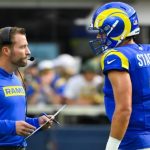 One of the most talked-about aspects of the Rams’ trade deadline approach was their decision not to trade Matthew Stafford and Cooper Kupp. Both players are still highly productive but come with hefty contracts and, in Stafford’s case, injury history that has sidelined him for stretches in recent seasons.
Despite the Rams’ 4-5 record, keeping Stafford and Kupp speaks to the organization’s confidence in their impact on and off the field. Stafford, known for his arm strength and clutch performances, continues to bring stability to an offense that has seen significant turnover in recent years. Meanwhile, Kupp remains a reliable target and a valuable leader in the locker room. For a team that is young in many positions, these veterans provide not only production but mentorship, setting a standard that will benefit the franchise’s emerging talent.
The Rams’ strategy appears to be a mix of short-term competition and long-term planning. By holding onto Stafford and Kupp, the team can still realistically chase a playoff spot if they can string together some wins in the second half of the season. Given the Rams’ recent track record of success, including a Super Bowl win, the team is not in a position where a complete tear-down rebuild seems appropriate, especially with head coach Sean McVay’s focus on winning.
By parting with players on expiring contracts or those who could be replaced by younger talent, the Rams are focusing on preserving their cap space and amassing draft picks to bolster their depth in the coming years. This approach will give them the flexibility to potentially rebuild while still keeping a foot in the door for potential playoff contention each season.
In the NFC West, the Rams are currently tied for last place but are still within striking distance of a wild-card spot. The division has been competitive, with teams like the San Francisco 49ers and Seattle Seahawks setting a strong pace. However, if the Rams can gain momentum, their veterans give them the firepower needed to compete.
Stafford and Kupp, if healthy and able to produce as they have in previous seasons, can be the core around which the Rams build an effective late-season push. Keeping them on the roster allows the Rams to keep their playbook open and gives them a chance to stay competitive, particularly if younger talent continues to develop around them.
The Rams’ moves reflect the difficult balance of pursuing playoff potential while simultaneously retooling for the future. It’s a fine line to walk, and it will require continued flexibility in terms of salary cap management and player development. Stafford’s durability and Kupp’s consistency will be essential to this plan, as their leadership can provide stability even when other areas of the roster are in flux.
As the Rams move into the second half of the season, they’ll rely on Stafford’s experience and Kupp’s reliability to stay afloat in the NFC West. At the same time, they’ll be assessing the performance of their younger players, determining which of them might be long-term fits. This dual approach allows the Rams to stay relevant now while also preparing for a deeper rebuild down the road.
With their 2024 trade deadline moves—or lack thereof—the Rams have signaled a commitment to building sustainably without losing the spirit of competition. Stafford and Kupp staying with the team means that Rams fans still have familiar faces to cheer for, and the younger players on the team have veteran leaders to learn from.
As the season progresses, the Rams’ management will likely continue to make strategic adjustments, assessing both their veteran stars and emerging talents. In this way, the Rams are striving to balance immediate competitiveness with a future-oriented approach, maintaining a foothold in both the present and what lies beyond. It’s a calculated risk but one that could yield positive outcomes in both the near and distant future if executed correctly.
For Rams fans, the decision to hold onto key players while making subtle roster changes represents a commitment to seeing what this squad can accomplish, even in a challenging NFC West. Whether they make a serious playoff push this season or build momentum for future years, it’s clear the Rams aren’t ready to step back entirely.
Ok ACQ, what say you in from your comfortable arm chair? COMMENT ON IT: